
Debt-to-Income Ratio: What It Is and Why It Matters
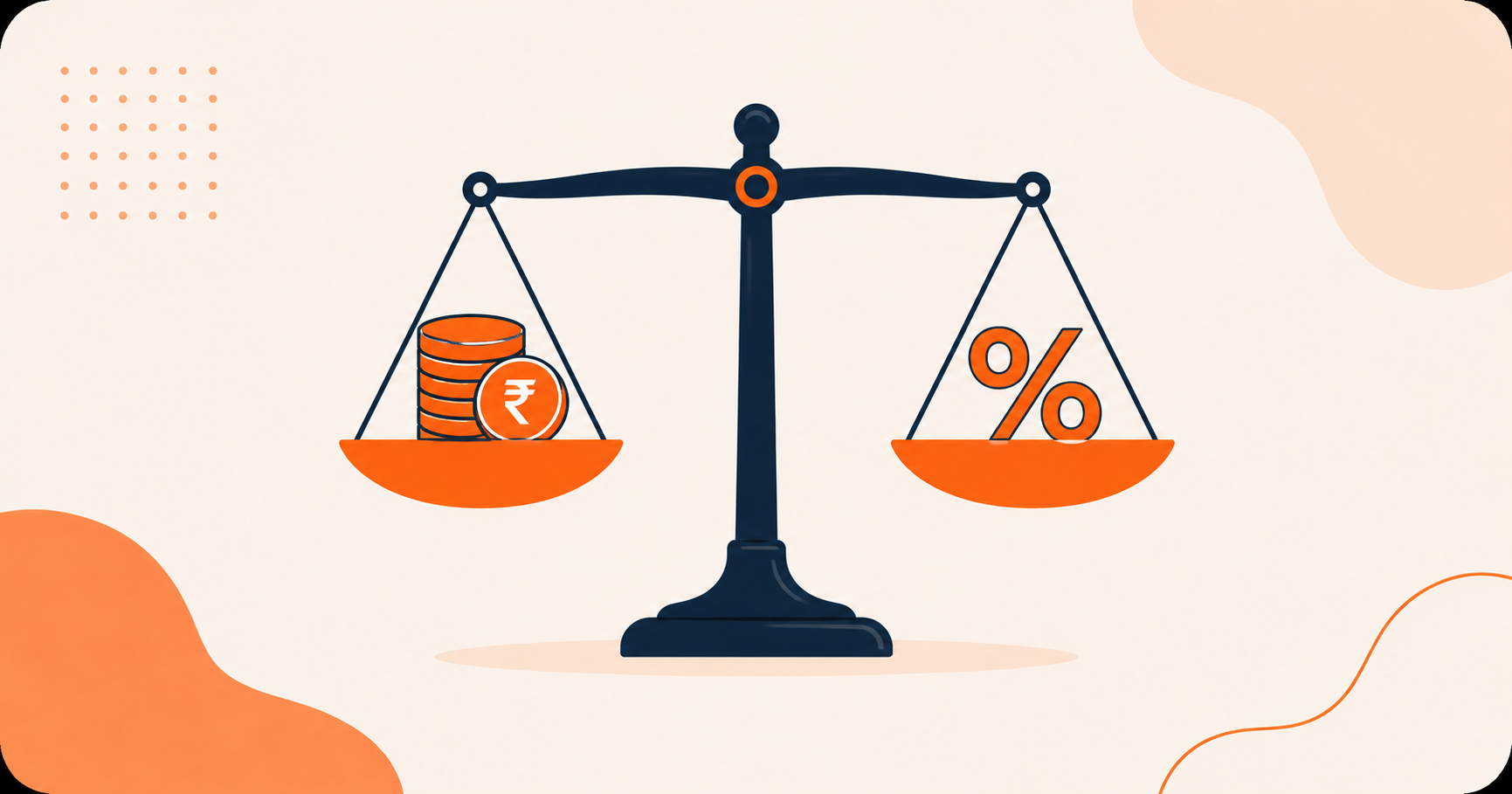
Of all the numbers that describe your financial health, debt-to-income ratio (DTI) is one of the simplest to calculate and one of the most telling. It's exactly what it sounds like: how much of your income is already spoken for by debt repayments, before you've spent a rupee on anything else.
How to calculate it
Add up all your monthly debt payments — home loan EMI, car loan, personal loan, credit card minimums (or full statement payments if you clear them) — and divide that total by your monthly take-home income. Multiply by 100 and that's your DTI as a percentage.
What the number is telling you
A lower DTI means more of your income is actually free to save, invest, or absorb a shock. As it climbs, less room is left for everything else — and lenders know this too, which is why DTI is one of the first things they look at when deciding how much more they'll lend you. A high DTI doesn't just strain your monthly cash flow; it can also limit your options later, right when you might need a loan for something important.
Why it sneaks up on people
DTI rarely spikes all at once. It creeps up EMI by EMI — a car loan here, a personal loan there, each one individually "affordable" against your salary at the time it was taken, but never re-evaluated against the total picture. That's how someone can end up with three or four loans that each seemed reasonable on their own, adding up to a ratio that quietly limits everything else.
What counts as a healthy range
There's no single number that applies to everyone, since it depends on the type of debt, interest rates, and your income stability — but as a general orientation, the lower your DTI, the more breathing room you have. If a large share of your income is already committed before you've paid for anything else, that's usually the first thing worth addressing before taking on new financial goals.
If you're not sure where your own ratio stands, or what to do about it, the debt category in a Financial Health Check looks at exactly this, and can connect you with a Personal Finance Professional who specializes in debt management if that turns out to be your biggest gap.
Want to see where your own finances stand?
Start Your Free Health Check